I have seen Wilson and Orton-Gillingham programs change students’ lives. Because they work so well for so many kids, they have been the go-to approach for dyslexia intervention for decades.
But they don’t work for every child. Not every brain learns the same way, and not every dyslexic brain learns the same way either. Some families come to us after two, three, or four years of OG-based tutoring, and their child is still reading slowly and with a lot of effort. That is why I kept looking for more ways to make sure we can reach every student.
That search led me to EBLI™ (Evidence-Based Literacy Instruction), a speech-to-print approach to reading and spelling.
Wilson vs. EBLI™: Print-to-Speech vs. Speech-to-Print
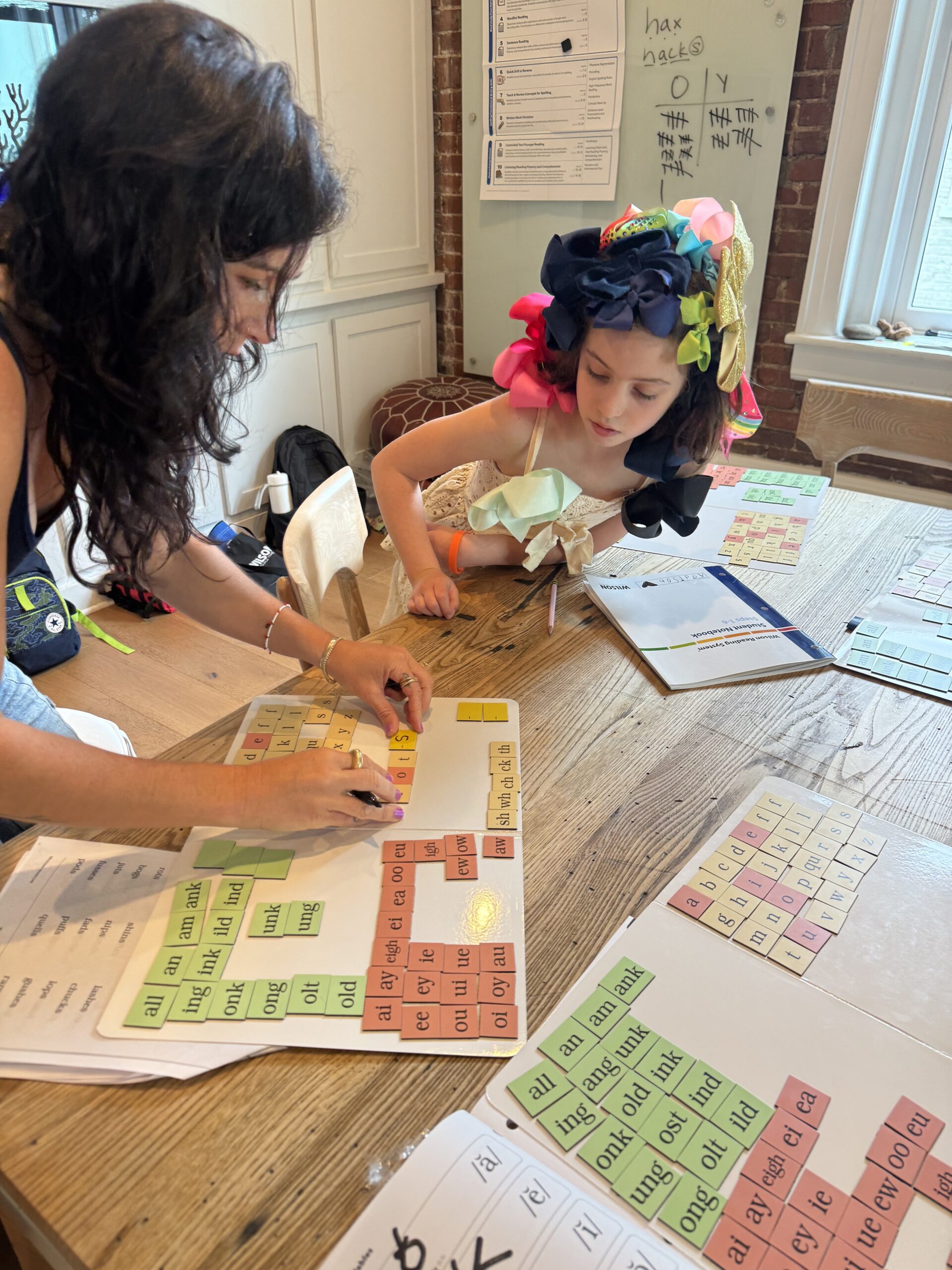
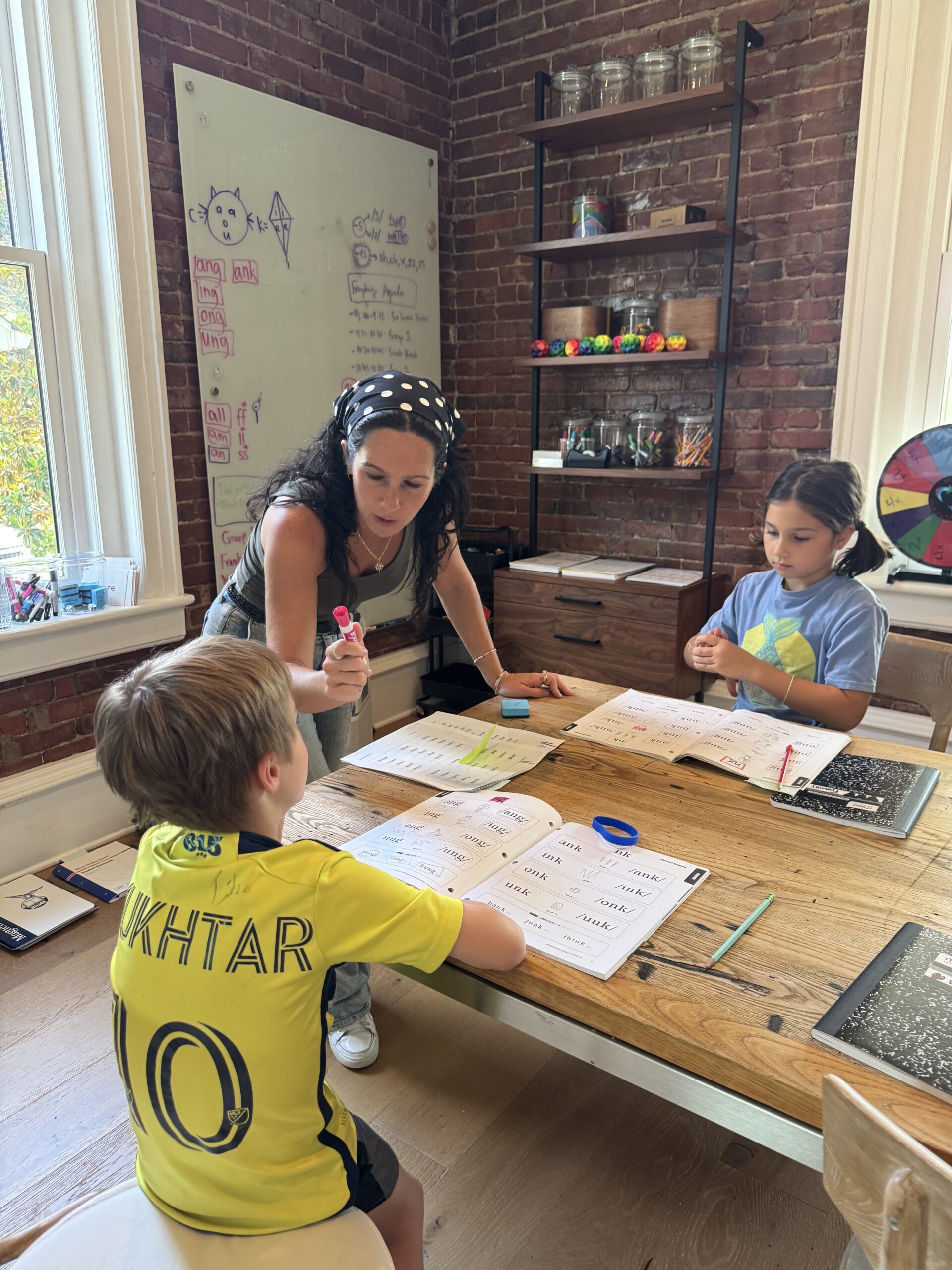
The Wilson Reading System® and other Orton-Gillingham programs generally teach print to speech. Students learn letters, letter patterns, syllable types, and rules, then use them to turn print into sounds.
EBLI™ works the other way, from speech to print. It starts with what a child already knows: the sounds of spoken language.
This matters because our brains evolved to learn spoken language naturally. That is why a child learns to talk and understand without being formally taught. We did not evolve to read and write. Reading is a human invention, and the brain has to adapt to learn it.
When we start with sounds, students are building on language networks that are already strong. That lightens the mental load. Instead of memorizing a long list of rules, syllable names, and exceptions, students learn the code by starting from sound.
What an EBLI™ Lesson Looks Like Compared to Wilson
In a Wilson or Orton-Gillingham lesson
Students follow a scope and sequence that introduces one syllable type at a time. For example, a student might learn the vowel-consonant-e pattern and practice words like bake, cake, and made. Other spellings of the same sound come later, often taught as exceptions.
In an EBLI™ lesson
We start with the sound. We take the long A sound, /ā/, and explore every way it can be spelled:
- a (as in baby)
- a-e (as in bake)
- ai (as in rain)
- ay (as in play)
- ey (as in they)
- and more
Students learn all 44 sounds of English and the different ways each one is written. Exceptions turn into one more spelling of a sound they already know.
One of my favorite things to teach is that “ti” very often makes the /sh/ sound, as in station, nation, and patient. It blows students’ minds. They pick it up quickly, and suddenly words that looked impossible make sense. They start reading harder words faster.
Does EBLI™ Work? The Hyde Park Day School Study
In April 2026, independent researcher Dr. Dennis Ciancio of SignalPoint Research published a pilot study of EBLI™ at Hyde Park Day School in Chicago, a school for bright students with dyslexia and language-based learning disabilities.
The study followed 53 students in grades 2 through 7 across three campuses. They were a group who had received years of intensive OG-based instruction but were still falling behind. At the start, their word reading was between the 5th and 9th percentile.
Over two years, six teachers and speech-language pathologists used EBLI™ with these students. The results:
- Fluency growth went from about 9 to about 25 words correct per minute per year, close to the growth rate of typical readers.
- Students gained fluency 4 to 5 times faster per hour of instruction than they had under their OG-based program.
- Reading accuracy went up by an average of 12%.
- Spelling standard scores went up by an average of 6 points.
- Students showed very little summer slide between spring and fall.
Teachers also said students stopped guessing and started decoding word by word, syllable by syllable. Children who used to avoid hard text started taking it on with confidence. Many began to believe they could learn to read.
This was a pilot study without a control group, and more research is coming. Still, for a group of students who weren’t responding to OG, the results are very encouraging.
Is EBLI™ Better Than Orton-Gillingham?
This isn’t about choosing sides. OG and Wilson are proven methods, and they will always have a place. The goal is not to replace one approach with another. The goal is to have more than one approach, so that when a child isn’t making the progress they should, we have another way in.
A note from Redwood Literacy
Dyslexia Tutoring in Evanston: Work Directly With Sammi Oberman Starting November 1
Sammi Oberman, our Director of Programming & Student Outcomes, is taking on 4 students this year to work with directly, starting November 1st. Sammi is a certified dyslexia specialist and holds a master’s degree in special education.
Sessions are one-on-one and in person at our Evanston location, for 2nd grade through high school. Each session is 1 hour:
- Tuesday/Thursday, 3 to 4 PM (twice a week)
- Tuesday/Thursday, 5 to 6 PM (twice a week)
- Wednesday, 4 to 5 PM (once a week)
- Wednesday, 5 to 6 PM (once a week)
Every student starts with pre-assessments to set a baseline and build an intervention plan for them.
Spots are first come, first served, so lock yours in today:
Frequently Asked Questions
What is the difference between Wilson and EBLI™?
Wilson, an Orton-Gillingham program, teaches reading from print to speech, one syllable type and rule at a time. EBLI™ is a speech-to-print approach that starts with the 44 sounds of English and teaches all the ways each sound can be spelled.
What is a speech-to-print approach?
Speech-to-print instruction starts with the sounds of spoken language, which children already know, and then teaches how those sounds are written. This builds on the brain’s natural language networks and reduces memorization of rules.
Can EBLI™ help if Orton-Gillingham hasn’t worked?
In a 2023 to 2025 pilot study at Hyde Park Day School, students who had not made expected progress with OG-based instruction grew in reading fluency 4 to 5 times faster per hour of instruction after starting EBLI™.
Who can enroll in EBLI™ tutoring at Redwood Literacy Evanston?
Students in 2nd grade through high school can enroll in one-on-one, in-person sessions at our Evanston location, once or twice a week.
Wilson Reading System® is a registered trademark of Wilson Language Training Corporation. EBLI™ is a trademark of its respective owner. Redwood Literacy is not affiliated with or endorsed by either organization.