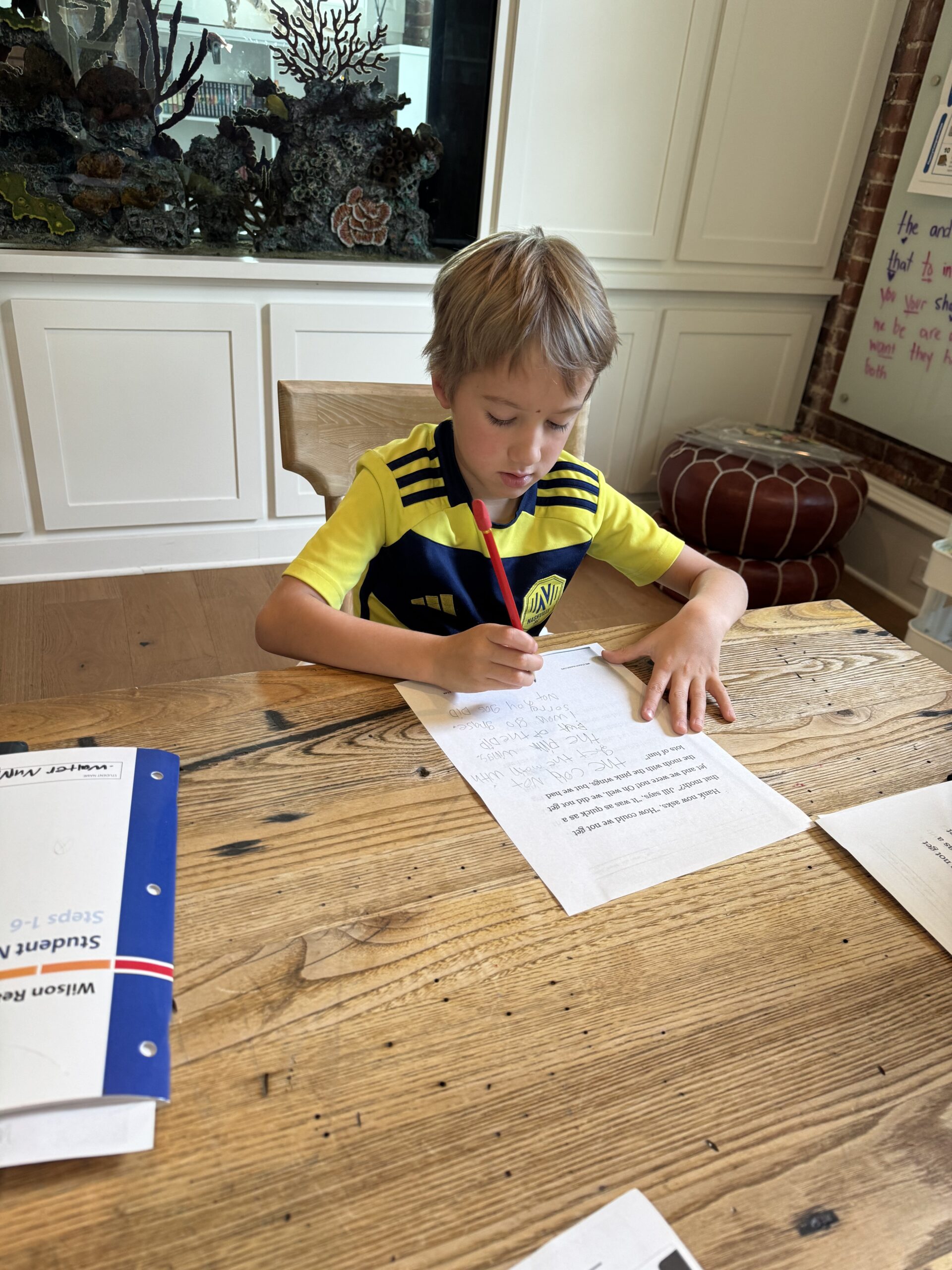
When your child is struggling to read, you hear a lot of promises. We’d rather show you the data. That’s why we asked an outside team to review how we teach.
This fall, LXD Research, an independent firm that evaluates education programs, finished its review of Redwood Literacy. The report is called Evidence of Impact. It was led by Rachel Schechter, Ph.D., and it looks at how our evidence-based reading intervention is designed and how our students grew in the 2025–26 school year.
Here’s what it found, in plain language.
Our Evidence-Based Reading Intervention Meets ESSA Tier IV
The Every Student Succeeds Act (ESSA) is the federal law that sorts school programs into four evidence tiers. Schools use these tiers when they pick programs and apply for funding.
LXD found that Redwood’s design meets ESSA Tier IV: Demonstrates a Rationale. Tier IV means a program has a clear logic model built on existing research. In other words, the way we teach lines up with what reading science already shows works.
Both of our 2025–26 studies also earned LXD’s Effectiveness Case Study designation. LXD gives this label to programs with positive results from real students.
Four Design Choices Backed by Reading Research
LXD connected four parts of the Redwood Method to the research behind them:
- Structured, explicit, multisensory instruction. Our instructors teach programs like the Wilson Reading System® and SPELL-Links™. (Here’s why we also use a speech-to-print approach.)
- Enough sessions to matter. Most students get 120 to 375 minutes of instruction each week. Research on dyslexia intervention points to dosage as one of the strongest predictors of growth.
- Trained Instructors. Each instructor gets ongoing feedback from a Curriculum Specialist.
- Constant progress checks. We track progress weekly and adjust instruction as we go.
What Our Students’ Growth Looked Like
The first study looked at 108 students who took the DIBELS® 8 reading test in both fall and spring. DIBELS® 8 is a national, standardized reading assessment.
These students started the year about 60 points below the national average. Kids who start that far behind usually grow more slowly. Ours didn’t.
- 108 out of 108 students improved.
- Students gained 103 points on average. The national expected gain is 80, so our students grew 29% more than expected.
- Every grade, first through eighth, beat the expected gain.
- Oral reading fluency rose 47%, which is about 26 more words read correctly per minute.
- Reading comprehension (Maze) rose 83%.
- Word reading fluency rose 126%.
Growth was strong online, too. Students learning with us online grew steadily. LXD also found that small-group and one-to-one lessons produced the same growth per hour.
A School Partner Story: Jemez Valley Elementary
The second study took place at Jemez Valley Elementary in New Mexico. Redwood worked with 15 students in grades 2–5. Every student had an IEP, and we started in the middle of the year.
By spring, the group’s reading rate had roughly doubled, from about 22 to about 44 words correct per minute. Students made significant gains on five of the six reading measures tracked after Redwood began.
One third grader read 18 words per minute at 72% accuracy in March. By late April, he read 30 words per minute at 94% accuracy.
The school’s principal put it this way: “The growth we saw in our special education students was immense.”
What This Means for Your Child
No single report can promise how one child will grow. Most of our students make big gains, but catching up often takes more than one year. What this review does tell you is that our approach is grounded in research, and that our students’ growth is measured with independent tools every year.
If you just learned your child has dyslexia, start with our next-steps guide. If you’re comparing options, our 25 most common questions about online dyslexia tutoring is a good next read.
Frequently Asked Questions
What is an evidence-based reading intervention?
It’s reading instruction built on research about how kids learn to read. That usually means explicit, structured phonics and language lessons, taught often, with progress checks along the way.
What does ESSA Tier IV mean?
ESSA Tier IV, “Demonstrates a Rationale,” means a program has a clear, research-based logic model for why it should work. Tiers I–III require larger outcome studies. Redwood is planning a larger comparison-group study for the coming school year.
Who is LXD Research?
LXD Research is an independent research firm that evaluates education programs with ESSA-aligned methods. Learn more at lxdresearch.com.
Does online reading intervention work?
In 2025–26, our online students grew steadily on DIBELS® 8. LXD also found that small-group and one-to-one sessions produced the same growth per hour of instruction.
How do I get started with Redwood?
Visit Redwood Literacy to book a free consultation. We’ll talk through your child’s needs and recommend a plan.
Source: LXD Research (2026). Redwood Literacy: Evidence of Impact. Data from Redwood’s SY 2025–26 Annual Program Report and Jemez Valley Elementary growth study.